Move along one axis and the other two don't change. That clean non-interference is the whole idea — and why orthogonal came to mean independent well beyond geometry.
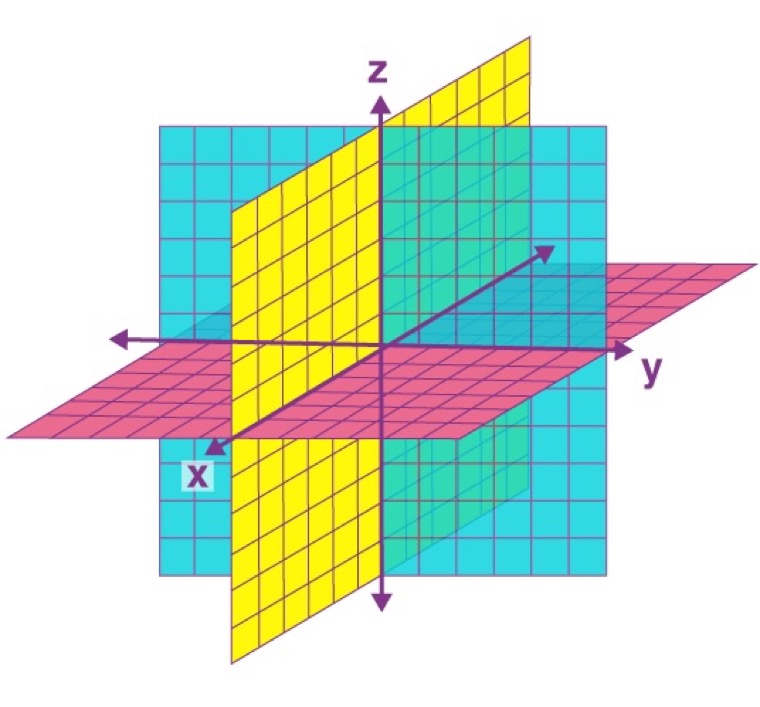
On orthogonal axes, moving along one changes nothing on the others. That independence is why the word is used far outside geometry.
Orthogonal is not 'opposite' and not 'unrelated' — it means independent. Two orthogonal things can both be true at once; they just don't interfere.
In one line
Two things are orthogonal when they meet at a right angle. The three axes of space — x, y, z — are the classic picture: each one is perpendicular to the other two.
Why the word turns up everywhere
"Orthogonal" came to mean independent — two orthogonal things don't affect each other, so you can change one without touching the other. Not "opposite," not "unrelated" — just independent.
Sources
Not medical advice. Plain-language summaries of authoritative sources; "optimal" targets are one reading of the literature, tighter than lab-normal. Every treatment decision is a clinician's.